Saturday, 27 July 2013

weather updates of dubai...

http://www.weather.com/weather/tenday/Dubai+United+Arab+Emirates+AEXX0004


http://en.wikipedia.org/wiki/Climate_of_Dubai


Dubai weather and when is the best time to visit.

Dubai whether does not vary much. However, in some months Dubai is extremely hot and reasonably cool for a few months of the year.
Dubai has only two seasons, summer and the winter. Summer starts around mid April. The temperature is around 30-32C till end April. Then it gradually starts increasing. So during June to October the temperature will vary from 35 – 40C. This is the extremely hot season of the year. Also, there are days where the temperature could go up to 45C.
It is hard to walk during the daytime in summer months. It is hot even in the night.
Date palm tree grows well in Dubai weather
People start going out around 8:00PM during the summer. I strongly recommend not planning outdoor activities on high-summer days. Humidity is generally high during the summer.
Date palm trees grow well in Dubai weather. Trees covered with juicy Date fruits can be seen everywhere in the summer.

Sandstorms (often called as Dubai prevailing wind) are not very common in Dubai. However, Dubai experiences few small-scale sandstorms every year.

Winter and the Dubai weather

“Winter” starts around the beginning of November. Dubai weather changes from extremely hot humid to nice and cool days in November. Temperature could drop from 33C to 20C during this month. December-January is the peak of winter. Temperature could drop to 15C during the daytime.

So when is the best time to visit Dubai?

Due to the Dubai weather pattern, November to April is the best time to visit Dubai. You can enjoy the sun, sandy beaches and desert dunes throughout the day during this period.


whats new in dubai...

Al Safouh Tram Project, Dubai, United Arab Emirates


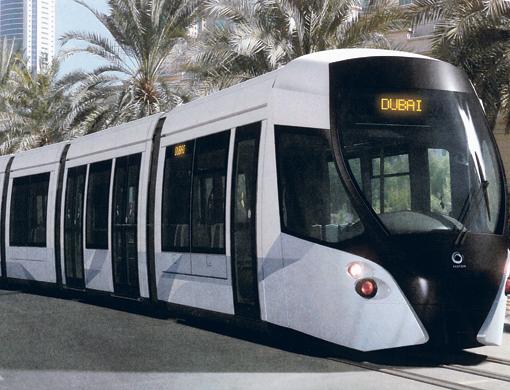
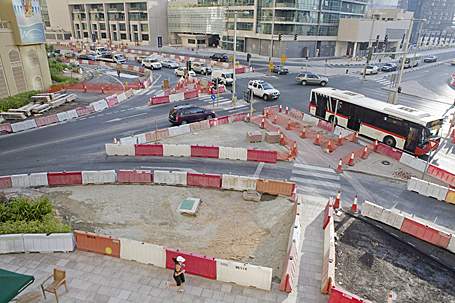
The Al Safouh Tram Project in Dubai is a 14km long route that mainly follows the Al Safouh Road, linking Madinat Jumeirah and the Mall of the Emirates with Dubai Marina and the Jumeirah Beach Residence. It is the first modern application of trams in the Gulf region and is being constructed in two phases.
Al Safouh is a district adjoining the western Dubai seafront. It accommodates some free economic zones, several retail centres and is associated with the city's booming tourist trade, notably the Palm Jumeirah development.
As of April 2011, construction of phase one was 30% complete. The project has been fast tracked by the Dubai Roads and Transport Authority (RTA) for an opening in 2014.
The project
Dubai is part of the UAE, a grouping of seven states formed in 1971, each ruled by their own emir and with a high level of autonomy. Dubai, the largest UAE city, and neighbouring Abu Dhabi are developing the area as a regional centre with particular reference to transport, trade and tourism.
Part of the transformation of the UAE since the discovery of oil in the 1950s has been the application of fuel revenues to diversify the economy with a view to long-term prosperity and stability.
A spate of building projects triggered a workforce demand, leading to rapid population increase. Growing by 292,000 during 2006, the population reached 1.42 million by the year's end, with around 75% of residents being expatriates. Such growth in a very short time has caused extreme traffic-related problems such as long journey times, a high level of accidents and pollution.
"The project has been fast tracked by the Dubai Roads and Transport Authority for a 2014 opening."
In 2007 a government official identified congestion costs as approximating to 3.15% of the worth of the Gross Domestic Product. If vehicle growth goes unchecked, the trend will lead to over five million cars registered by 2020, their effect mainly concentrated on the urban area.
The RTA beagn to address the issue through renewal and expansion of the bus fleet, also with low-emission vehicles for taxi operations. Introducing light rail transport to Dubai, the RTA Metro system is due to begin revenue services in late 2009.
MVA consultancy and its parent, Systra, have been involved with Dubai's public transport planning since 2004, the principal rail outcome being the Metro project. The tram mode was recommended to match the district's need for closely spaced stops to service commuter and tourism demand. It also will make RTA's coverage more comprehensive for wholly public transport journeys.
First announced in April 2008, RTA signed a contract in June valued at over €550m with the ABS consortium for delivery of Al Safouh project phase one. The composition of ABS is Alstom of France (with around €300m of the total), Belgian construction company Besix and UK-based multi-sector operator Serco.
Phase one of the project involves laying a 9.5km long track from Dubai Marina to the Mall of the Emirates Station. It will have nine stops, with a standard platform length of 44m. Phase two comprises 4.5km long track with ten stations.
Infrastructure
Al Safouh will be the world's first open tramway to have all stops aligned with platform screen doors, this allowing for full air conditioning of the system. Giving consistency with other RTA modes, including bus shelters, air conditioning adds to customer appeal in regular temperatures around 40°C. Another innovation is the use throughout of Alstom's catenary-free APS (Alimentation Par le Sol) system for electricity ground supply to trams whilst overhead.
"Phase one of the project involves laying a 9.5km long track from Dubai Marina to the Mall of the Emirates Station."
Although APS has been in use on sections of the Bordeaux tramway since 2003 and is specified for other French cities Angers, Reims and Orléans, this is the first total system application. As with third-rail pick-up being specified for Dubai Metro, the authorities wished to avoid what is considered as visually intrusive overhead line equipment.
Mainly at surface level, there will be some elevated track near the Marina. To encourage overall public transport use, interchange with the Metro Red Line will be provided at three points.
Rolling stock
Alstom will supply 25 APS-fitted 100% low-floor Citadis 402 trams; eight will enter service as part of phase one, and the remainder as part of phase two. This seven-module 44m variant is in service with APS equipment in Bordeaux and also with overhead supply in Grenoble, Strasbourg and on Paris T3 where it is configured to carry just over 300 passengers. Capacity in each direction for the Al Safoouh project is put in excess of 5,000 passengers per hour. Each train will also have a carriage solely for women and children.
The trains will operate on power supplied by modern ground cable system.
Signalling and communications
The signalling and ticketing system will be supplied by Alstom, as is the control centre, which will probably be incorporated in the depot.

One of the world's fastest growing cities, Dubai is associated with high-profile developments.
Alstom's proprietary APS ground supply system is being fitted throughout on the Al Safouh system.
Consortium member Serco is service operator on the successful London Docklands Light Railway.
Widely fitted on metro systems, platform screen doors will be used on a surface tramway for the first time in Dubai.
A high-capacity vehicle, the seven-module Citadis 402 can accommodate over 300 people.


images of Dubai tram project


Friday, 28 June 2013

dubai mall

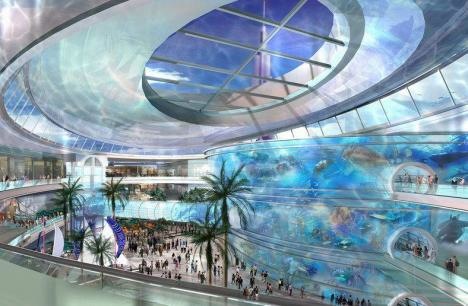
The Dubai Mall is one of the world’s largest shopping malls located in Dubai. Built at the foot and an integral component of the Burj Dubai, the 20-billion-dollar project is the world’s largest in total area with 1,200 shops.It is 4 times as many as the new London Westfield centre. Twice delayed, Dubai Mall opened on November 4, 2008, with about 600 retailers, marking the world’s largest-ever mall opening in retail history. However it is not the largest in gross leaseable space, and is surpassed in that category by several malls including the South China Mall, Golden Resources Mall, SM City North Edsa, and SM Mall of Asia.Sprawling over 12 million sq ft (equivalent in size to more than 50 soccer pitches), the Dubai Mall has a total internal floor area of 5.9 million square feet and leaseable space of 3.77 million square feet, about same as West Edmonton Mall.


Features of dubai mall...

1. Dubai Aquarium

Dubai Mall Aquarium
 
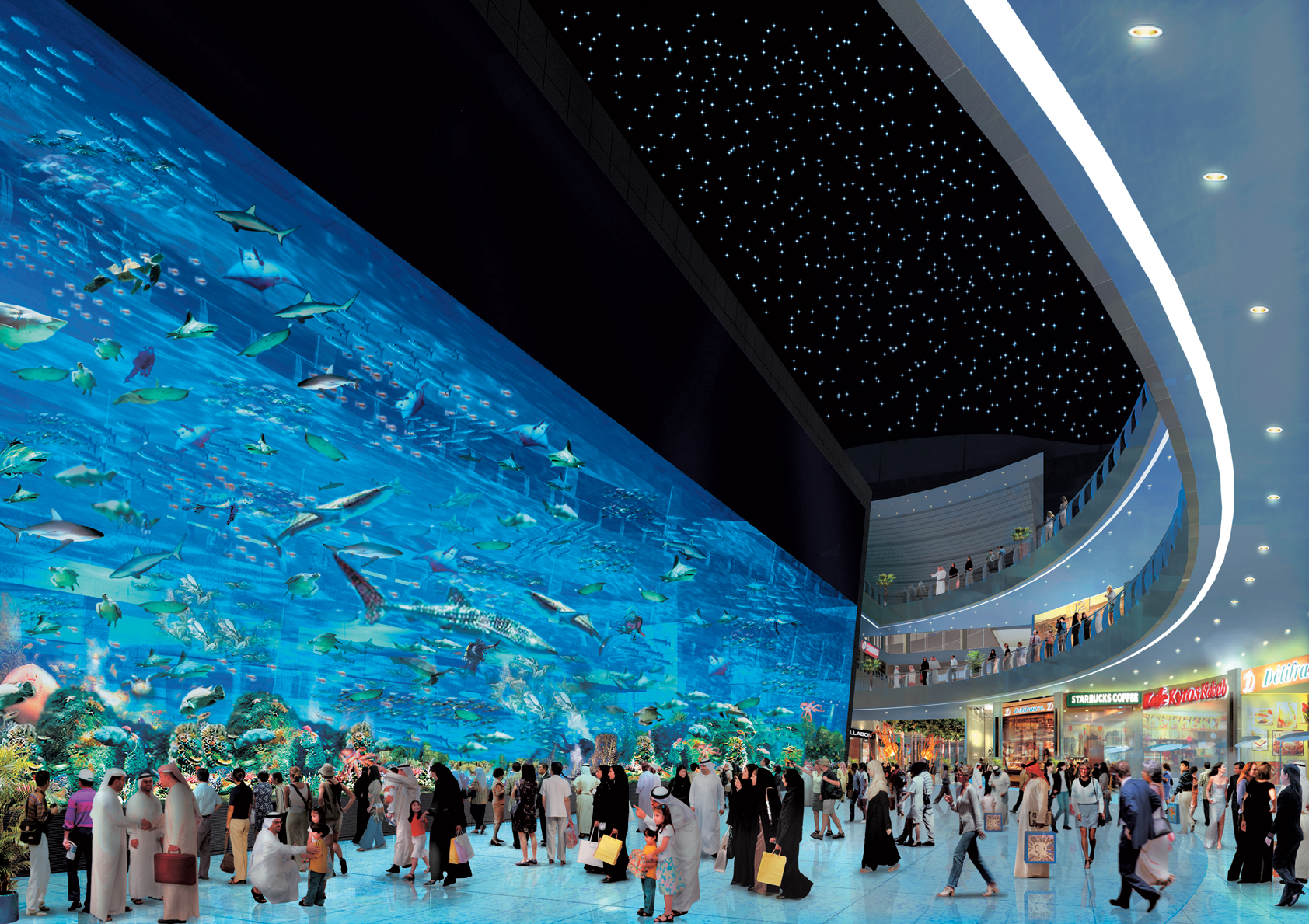
 A key centerpiece is Dubai Aquarium, one of the of the largest tanks in the world at 51m x 20m x 11m and featuring the world’s largest viewing panel at 32.8m wide and 8.3m high. Over time, Dubai Aquarium will have more than 33,000 living animals, representing more than 85 species including over 400 sharks and rays combined. Dubai Aquarium’s 270-degree glass walkthrough tunnel makes for incredible close-encounter experiences.
 

2. Ice Rink

 
Dubai Mall Ice Rick
 
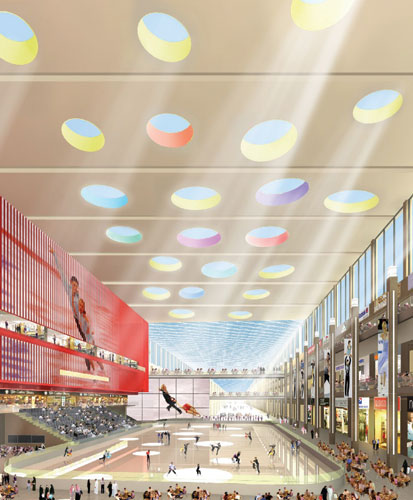
Glide into a magical winter wonderland at Dubai Ice Rink. With its larger than life Olympic-size proportions, whether you want to learn skating, perfect your technique, play ice hockey, socialise with friends or just have a great time, this spectacular venue is the coolest place to hang out any time of the year.
Prices:
* Skate hire and 2 hour session – AED 50
 

3. Kidzania

Dubai Mall Kidzania
 
Imagine a city made for children and run by them. A place where they fly the aeroplanes, they drive the buses and they work in the restaurants. Imagine a world where children are free to live out their dreams – playing adult roles in a world created just for them, in meticulous detail.
 

4. Reel Cinemas

Dubai Mall Reel Cinemas
 
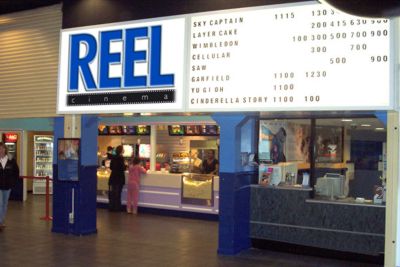
Redefine the cinematic experience with sensory overload at The Dubai Mall’s massive Reel Cinemas complex. The largest in Dubai with 22 screens, the ‘multiplex’ will feature the latest International blockbusters to local indie hits. Grab some friends, load up on popcorn and prepare to be entertained.
 

5. Sega Republic

Dubai Mall Sega Republic
 
Enter a nation addicted to adrenalin. The region’s first SEGA indoor theme park is a mind-altering, visually-stimulating, adrenalin-pumping attraction. SEGA Republic is where you create your own rules. Rebel against the senses and go into overdrive. Get addicted.

Thursday, 27 June 2013

tallest building burj khalifa in Dubai...

828m (2,717 ft)including tip 829.8m(2,722ft)
construction started from January 2004 n completed on January 4th 2010.
Architect- Adrian Smith
Developer- Emaar properties
Structural engineer- Bill Baker
Cost of construction-USD 1.5 billion .163floors.public can enter only at the floor 124...
 

introduction for dubai...


Early Dubai history

3000 BC: When Dubai history could be said to have begun. Archaeological evidence points to the area having been settled from at least the Bronze Age.
5th - 7th centuries AD: Jumeirah was a trade route caravan station linking Oman with what is now Iraq. Livelihoods were based on fishing, boat-building and pearling.
16th century: European influence began with Portuguese interest in the area's trade routes.

18th 20th century Dubai history

1793: The Bani Yas tribe assumed political power and settled in Abu Dhabi. Dubai later became a dependency. This period of Dubai history was beset with many tribal wars.
1820: Britain negotiated the first of many maritime truces with local rulers. This led to the area being dubbed the Trucial Coast.
1833: Maktoum Bin Butti of the Bani Yas tribe settled on the Shindagha Peninsula at the mouth of the Creek, declaring the town's independence from Abu Dhabi. His dynasty still rules Dubai today.
1870s: Dubai became the principal port on the Gulf coast, with pearling the mainstay of the city's prosperity.
1902: The welcome migration of Iranian traders and Arab settlers to Dubai following the introduction of heavy taxes on Iran's Lingeh port. Dubai's trade has never looked back.

Early 20th century Dubai History

Overseas and domestic trade flourished, and Dubai boasted the largest souks in Arabia.
1950s: Oil discovered in the Trucial States.
1960s: The Indian and Pakistani population of Dubai grows, breathing new life into the textile market and increasing trade from the Indian subcontinent.

Modern Dubai history

1966: A milestone in Dubai history. Oil is discovered in Dubai's Fateh Oil field.
1971: The United Arab Emirates was formed for mutual security and prosperity and joined the Arab League. Dubai International Airport opened.
1979: Jebel Ali port opened.  Dubai World Trade Centre opened – the city's first high-rise, paving the way for a string of other ambitious architectural projects.
1985: Emirates airline launched.  Jebel Ali Free Zone inaugurated, attracting considerable overseas investment.
1996: Dubai World Cup held for the first time.  Dubai Shopping Festival launched.
1999: Burj Al-Arab opened and hailed as the world's only seven-star hotel.
2002: Sheikh Mohammed launches Internet and Media cities and private ownership for foreigners laying the foundations for “New Dubai”.
2003:  Ambitious projects began, including the world's tallest tower, and 200 man-made islands.
2006: Sheikh Mohammed bin Rashid Al-Maktoum becomes Ruler of Dubai and Vice President of the UAE.
2009: Emirates Terminal 3 and the Metro is launched to accommodate increasing air and road traffic.
2010: Burj Khalifa became the tallest man-made structure on earth.


                                                       Family tree of Al.Maktoum Family


Now you can explore Dubai before you travel there with Emirates. We have put together this Dubai guide to show you all its attractions and secrets. You will be able to experience the best in everything, from fine dining and nightlife to sightseeing and sport, through to world class boutiques and businesses.
With overflowing malls, world-class businesses and sophisticated haunts, it’s a truly international oasis that attracts entrepreneurs, adventurers and pleasure-seekers alike. Whether you travel to Dubai for business or on holiday, there is plenty to discover


National language of U.A.E - Arabic.
National bird of U.A.E - Falcon.
Currency-Dirham


Population (1 January 2013)
 • Total2,106,177
 • Density463.17/km2 (1,199.6/sq mi)
 • Nationality 
53% Indian
17% Emirati
13.3% Pakistani
7.5% Bangladeshi
2.5% Filipino
1.5% Sri Lankan
0.3% American
5.7% other countries